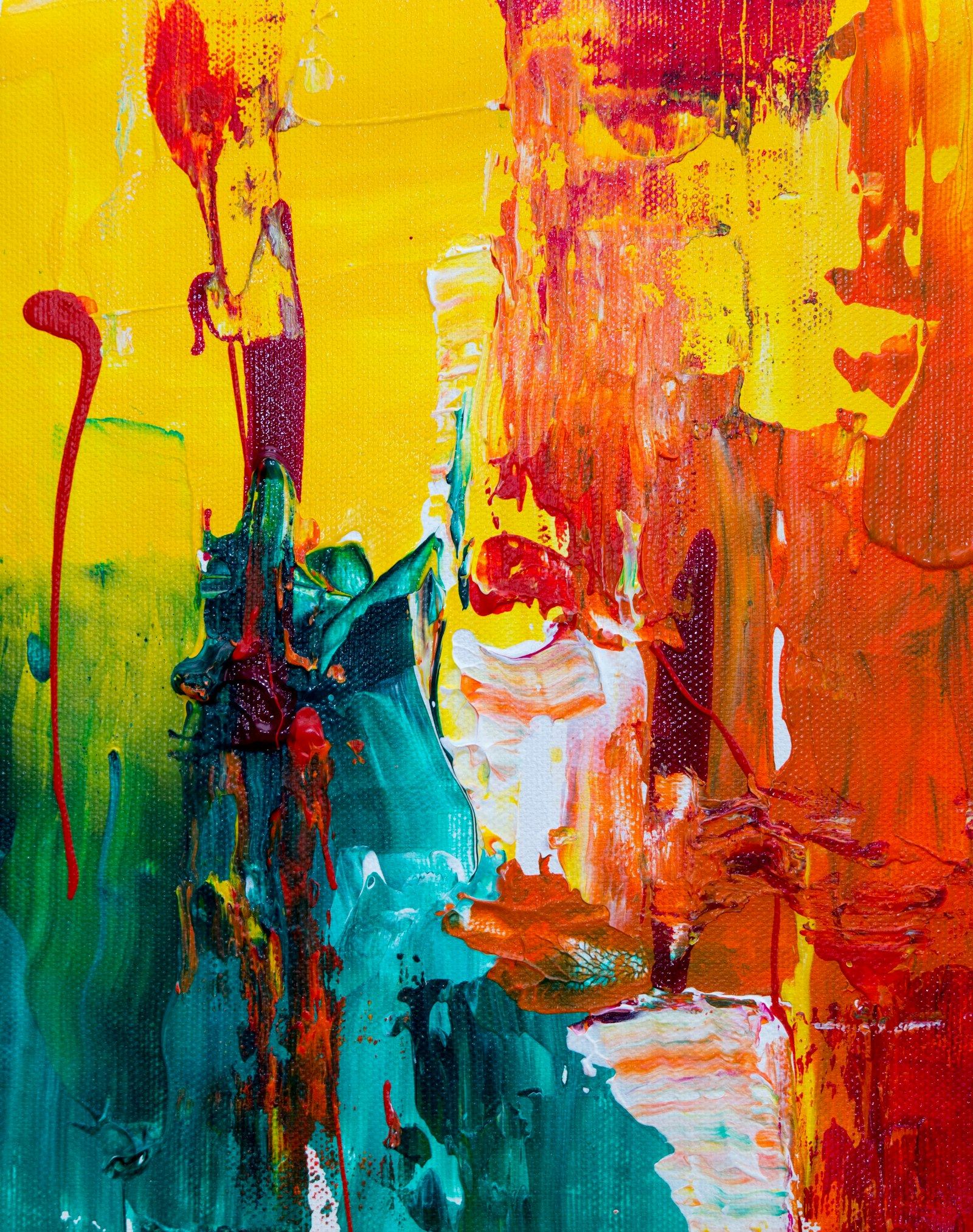

Controversially, I do find the work of artist Cy Twombly to be fascinating and worth analysis. Outside the art world, Twombly's work is often viewed as the epitome of "childish" modern art, meaningless, talentless, made solely for the purpose of money laundering and the pretense of pretentiousness. Critics argue that work like Twombly's serves only to ruin the legacy of postmodernist art, earning far too much recognition for what is essentially scribbles. Placing the artwork in the context of history, aesthetics, and form, however, I find Twombly's work to be a far more expressive and fascinating medium than many believe it to be.
Though Twombly came from a skilled background and spent much of his younger years in an art institute receiving training, much like the impressionist artists before him, he was fascinated by how art's forms could convey the emotional reality of life. Impressionism moved painting away from photographic accuracy toward the way a moment actually feels; Twombly took that project a few steps further. Though Twombly's work appears to be lines and scribbles, there is greater intent behind each line's weight, depth, and length than most initially observe.
In fact, Twombly spent a marked period of his life drawing in the dark to be able to master the forms of motion and language without light. Consider what that means as a practice. He wanted marks that came from the arm and the memory, not from the eye correcting itself in the moment. A line drawn in a dark room is a line you have to trust; a line you have to feel as it leaves the pencil. That habit is visible in the finished work, if you know it is there.
Most of his work often references classical literature or world events, but it intends to speak with the language of modern day art forms such as graffiti, language that spills and moves out of the confinement of a medium or frame. Later, his work would inspire prominent artists such as Jean-Michel Basquiat, who also used graffiti as a primary inspiration for his raw, emotional work. His supposedly amateurish paintings utilize oils, crayons, and pens to create visceral, wide-spanning images, abstracting scenes such as the battles of the Odyssey and Greek mythology into shapes and colors that actively bring the myths to life.
Works such as The Nine Discourses On Commodus focus explicitly on the blood, viscera, and rot of such events, bringing to life both Commodus's death and the metaphorical death of society along with it. The works are not afraid of being ugly, nasty, or disgusting. They rot and seethe out of their frames, and their boldness shines in full view. That is a hard mode to sustain across a room of large canvases. Most artists blink; Twombly does not.
In my belief, in order for something to qualify as art, it must fall along three axes: intent, context, and interpretation. Like with most conceptual art, Twombly's work fulfills all three criteria. The intent is documented in his practice and his letters; the context sits in the entire history of Western painting and the classical texts he keeps returning to; the interpretation is what you and I are doing right now, whether or not we agree on what we are seeing.
Twombly's art still has a complex legacy, especially as his work rose in prominence in the art dealing world and gained recognition in the larger media landscape. Though one can glean there is a level of pretentiousness to Twombly's art, as a whole, there is pretentiousness in any good art. Good art must believe in itself to be convincing and to make a change. Twombly may not be your favorite artist, but he is an impactful artist, and his work fascinates me on multiple levels.